

A Tropical Trip of a Lifetime

Updated: Dec 2, 2020

Waking up to the steady, comforting motion of the waves of the Pacific Ocean rocking the catamaran, was an experience I became accustomed to after the first couple of days. It was here I experienced the sights, sounds and smells of the beautiful French Polynesian Islands. This adventure, a two week exploration on a fifty-four foot catamaran, cruising to the islands of Tahiti, Raiatea, Tahaa, and Bora Bora was our family’s dream vacation. We were accompanied by a travel company called Te Mana Travels , who provided a chef and captain, and gave us the opportunity to engage in unique, cultural experiences and traditions, and discover some of the most beautiful, secluded locations in Tahiti and the surrounding islands.

Benefits of a vacation on these islands include:
- soaking up the sun
- swimming in the warm, crystal blue waters
- tasting local cuisine from the lush tropical landscapes of the islands
-learning about the native wildlife and exotic sea life
-participating in the rich culture of French Polynesia
- finding peace as you unplug from the world
Pearl Farms in Raiatea
The beginning of our journey started in Raiatea, which is the second largest of the Tahitian Islands and the southernmost island we visited. It is considered to be in the middle of the eastern French Polynesian Islands. The Tahitian Islands are known to produce unique black pearls that tend to have a darker undertone with bright colored over tunes, unlike your typical white pearl that you see in other parts of the world.

Raiatea is the home of several small family owned pearl farms which produce black pearls, one of French Polynesia’s prized exports. The Champon Pearl Farm, whose biggest competitor is Japan, offers tours and classes to tourists to learn about the cultivation process, genetic modification process and classification system of their black pearls. They individually categorize each pearl into classes: Class A, Class B, and Class C. The way in which they categorize the pearls depends on their size, shape/quality, and color.
Class A: would be a larger sized pearl, perfectly circular, and bright colored pearl
Class B: would be the middle sized pearls, with a slight imperfection or deformation, and with a decently bright coloration
Class C: would then be a small sized pearl, with a major shape defect, and with a dull color to it

The pearls are harvested from the native oysters grown and cultivated directly outside the family homestead. It is evident that the Champon family is passionate about their business and the Champon Pearl Farm’s pledge to have the least environmental impact as possible on the environment. I highly recommend a visit!
Coconuts in Taha’a 🥥
As we sailed our way over to Taha’a, just a little north of Raiatea, we met some locals on the island who told us the secrets of coconut trees. The Coconut is a very versatile drupe that Tahitians use in many different ways.

COPRA OIL is used in medicine (eczema, psoriasis, purgative action), in cosmetics (Monoï production, hair and body care, shine, anti-dandruff, soaps), and in food as well (margarine production)
COPRA CAKE, resulting from oil extraction, is recycled in cattle feed
COCONUT WATER is used in medicine (diuretic, anti-diabetic, eyewash, potions) and in food (refreshing water)
COCONUT FIBERS are used for the craft industry, especially for bag making, carpets, ropes.
COCONUT PALMS are used for roofing, torches and craft industry (baskets, nets)
COCONUT ROOTS also have an application in medicine for contusions and sprain care
COCONUT TRUNK, generally very straight, is used for the manufacture of pillars, hut platforms, and for the craft industry (tikis, bowls...)
I would recommend getting to know the locals and learning how they live off the land if you go to visit!!
Black Tips in Bora Bora

I never thought I would get to see the ocean as the color of “Cool Mint” Listerine. As we
began to sail closer to Bora Bora, just North of Taha’a, I could see the fine, white grains of sand that lay at the bottom of the bay. Once we found a calm, crystal clear place to anchor, we all jumped in with our snorkels on. As I put my mask under the water, I saw a shiver of Blacktip Sharks casually swimming by us. These Blacktip Sharks are known for generally being greyish/brownish with a white belly and black tipped fins. Ranging in size from 2-6ft in length, Blacktip sharks are the most common species of shark seen in the Polynesian lagoons. They are docile and tend to live in common snorkeling areas, which makes them accustomed to humans. I always had a healthy fear of sharks growing up in New England but since our encounters in Bora Bora, learning and understanding the behavior of these beautiful creatures, I would highly recommend putting your fears aside and jumping in!
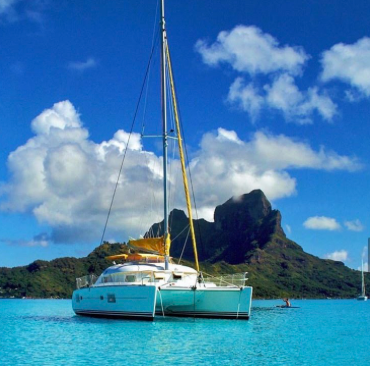
Overall, I would encourage anyone to charter a catamaran with family or friends and disconnect from your hectic lives and indulge in the adventure, culture, and tradition that the Polynesian Islands have to offer.


Comments